
There are many misconceptions about bunions, but one thing anyone can agree on is that they can be quite painful.
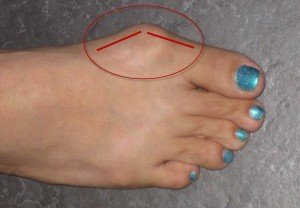
A bunion (hallux valgus) forms when the bone or tissue at the big toe joint—the metatarsophalangeal joint (MTP)—moves out of place, causing the big toe to point towards the second toe. Because this joint bears a lot of weight when walking, bunions can cause great pain.
Contrary to popular belief, bunions are not caused by high heels, pointy shoes, or a ballet dancing career. It is true that bunions are more common in women, but they are most often caused by inherited abnormal foot mechanics. It is not the bunion itself that is passed on genetically, but rather certain foot types that make a person more prone to bunions. Although shoes are not the cause of bunions, it is true that shoes that crowd the toes can make an already formed bunion worse.
The most prominent symptom of a bunion is a bulging bump on the outside base of the big toe and pain, swelling, a burning sensation or numbness at the joint. It might also be very painful to wear shoes. To fully evaluate the severity of the bunion, an x-ray is needed.
Bunions are progressive, they don’t go away on their own and will usually get worse over time, so it is good to see a podiatrist at the first sign of a bunion. Some bunions progress more rapidly than others, but early detection is important for successful treatment, and may help avoid surgery.
Non-surgical treatments to minimize the symptoms of a bunion include:
- Changes in shoe wear. Wearing the right kind of shoes is very important and I can help you determine the best shoes for your feet if you have early signs of bunions.
- Padding and/or taping to help keep the toe in better alignment to reduce pain.
- Medications such as anti-inflammatories such as ibuprofen to reduce inflammation and pain.
- Orthotic devices or shoe inserts to help control foot movement to reduce symptoms and prevent worsening of the bunion.
Surgery is often necessary if all early treatments fail or the bunion progresses past the threshold for such options. Surgery is performed to remove the “bump” of bone, correct the changes in the bony structure of the foot, and correct soft tissue changes that may have occurred.
As with many common foot conditions, seeking diagnosis and treatment as early as possible is the best option!
–Dr. Frank, 541-385-7129
Leave a Reply